Local Single: Chat & Friends
- 4.5
- Rating
- 500.00K
- Installs
- Free
- Price

 Analysis by App-foxy
I approached Local Single: Chat & Friends as a social app for meeting people nearby, but I also paid attention to how comfortable it feels for people using it in different situations. The basic idea is easy to understand: connect with local people and start conversations that may develop into friendship or something more personal. In practice, that makes the app most interesting when you want a more local alternative to broad social networks, although the experience depends heavily on how active and respectful the nearby community is.
Local Single is free to install, with optional purchases priced from $3.99 to $99.99 per item. It is developed by Local Single, belongs to the social category, and is intended for mature users aged 17 and over. The app was released on May 28, 2024, and version 1.3.0 supports Android 6.0 and later. Its average score is 4.5 from around 52 thousand ratings, while the app has passed 500 thousand installs. Those figures suggest that it has found a substantial audience, but they do not remove the need to judge whether its local focus fits your own circumstances.
How the interface supports everyday reading and navigation
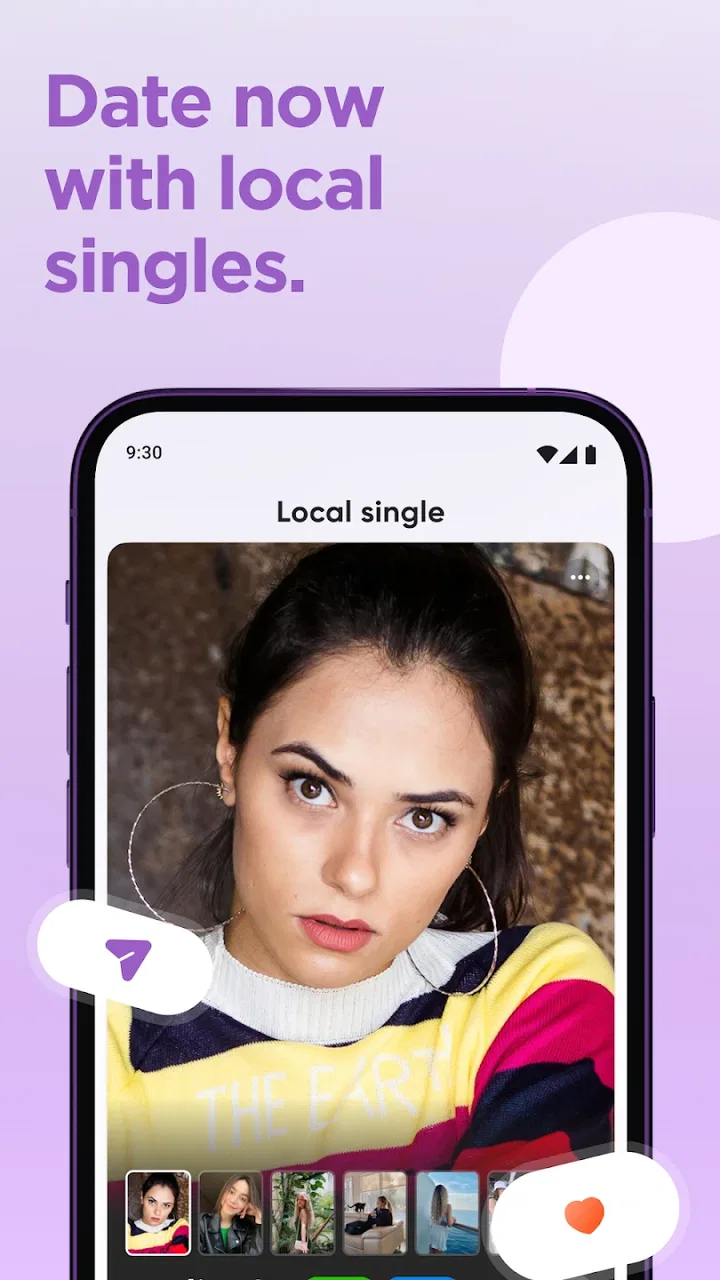
My first impression is that the concept is easier to grasp than the social mechanics. You are not opening a complicated productivity tool with several layers of settings; you are entering a space built around people, profiles and conversation. That simplicity can be helpful for someone who dislikes crowded apps, especially when the goal is simply to see who is nearby and decide whether to interact.
You May Also Like

 Pandora - Music & Podcasts
Pandora’s Music Is Easy to Start, but Harder to Recover
Pandora’s strength is its low-effort path from a seed to a station. Its weak spot is how much confidence it asks you to place in connection, setup, and quiet recovery.

 AccuWeather: Weather Radar
AccuWeather Review: A Quick, Clear Forecast for Everyday Decisions
For everyday plans, the best forecast is the one you can understand quickly. AccuWeather makes rain timing, radar, and local conditions easy to act on, with a few trade-offs.

 Hill Climb Racing
Why Hill Climb Racing Still Turns Crashes Into One More Run
A tiny car, a bumpy hill and one more upgrade: Hill Climb Racing keeps resurfacing because its simple chaos makes every near-miss feel personal.

 AliExpress - Shopping App
AliExpress Makes Global Shopping Feel Personal, but Shoppers Bear the Risk
AliExpress turns a global marketplace into a pocket-sized discovery engine. Its reach is useful, its shopping loop compelling, and its trade-offs easy to miss.

 Lords Mobile: Kingdom Wars
Lords Mobile Is a Kingdom-Building Routine, Not a Quick Match
A case-by-case verdict on the building, battles, device demands, and social commitments that make Lords Mobile rewarding for some players and exhausting for others.

 PDF Scanner app - TapScanner
TapScanner Makes Paperwork Easier to Capture, Check, and Share
TapScanner makes scanning with a phone feel less like a rescue operation and more like a dependable step in getting work done. Its capture tools are useful, though not flawless.
More From Our News Desk
View All News


The most important readability test is not whether every screen looks attractive. It is whether I can understand what a person is offering, what action I am about to take and whether a conversation is moving somewhere useful. For this kind of app, profile text carries more meaning than decorative presentation. I recommend taking a moment to read the complete profile before starting a chat, rather than treating the first visible detail as enough information to make a decision.
That habit also makes navigation less tiring. Instead of opening every profile in a rapid sequence, I found it more sensible to create a small routine: scan for local relevance, read the introduction, check whether the person explains what they are looking for, and only then begin a conversation. This is a practical advantage for people who find fast-moving social feeds overwhelming. It turns browsing into a deliberate process rather than an endless stream of decisions.
Users who rely on larger text, screen magnification or strong visual contrast should judge the app on their own device, because comfort can vary with system settings and display size. I would not assume that a social app designed for quick browsing will be equally comfortable at every text scale. If increasing text size causes labels to crowd together or forces frequent scrolling, the experience may become frustrating even when the basic functions remain usable.
There is also a cognitive side to navigation. Meeting unfamiliar people involves remembering names, interests and the context of previous messages. I recommend keeping initial conversations focused instead of opening many chats at once. This is not just a social tip; it reduces the mental load of switching between different people and makes it easier to notice inconsistencies or uncomfortable behavior.
Why local context changes the browsing experience
The local emphasis is the app’s clearest point of difference from a general social network. A broad platform may offer more communities, media formats and established contacts, while this app is more appealing when distance matters. For example, if I have moved to a new area and want to find someone for a casual coffee, a walk or a conversation about nearby life, local discovery is more relevant than an international feed.
That advantage comes with a trade-off: a smaller geographic focus can also mean fewer suitable profiles. In a densely populated place, local discovery may feel active. In a quieter area, I may need more patience and a wider idea of what “nearby” means. I would not choose this app expecting the variety of a huge worldwide network. I would choose it because location is more important to me than having the largest possible pool.
Another useful approach is to treat profile reading as a safety and accessibility step. A clear profile can reveal whether someone prefers text conversation, wants to meet quickly, or has a very different expectation from mine. That information helps people with limited energy, social anxiety or a need for predictable communication avoid unnecessary exchanges. The app cannot make another person considerate, but careful selection can reduce avoidable friction.
Motor, sensory and communication considerations
Social apps often look physically simple because they mainly involve tapping, scrolling and typing. That does not mean they are equally easy for everyone. Repeated swipes can be tiring for someone with limited hand movement, tremors or joint pain, while long text entry can be difficult for users who depend on alternative input methods. In my experience, the most manageable workflow is to browse in short sessions and write messages with a clear purpose rather than trying to maintain several conversations continuously.
If typing is uncomfortable, preparing a few natural opening questions in a notes app can reduce repeated effort. I would avoid sending identical messages to everyone, because that makes conversations feel impersonal, but having a small set of adaptable prompts is practical. Questions such as what brought someone to the area or what they usually do locally are easier to personalize than a vague greeting and can help the other person respond with useful detail.
For users with hearing loss, a text-first social experience may be more convenient than an app that expects immediate voice or video interaction. Written conversation gives more control over timing and removes the need to hear spoken words clearly. It also helps people who communicate better after having time to think. However, text does not automatically solve every communication barrier. Sarcasm, vague replies and sudden changes in tone can still be difficult to interpret, so I prefer direct questions and explicit boundaries.
People with visual sensitivities may want to use the app in a calmer environment and adjust their phone’s display settings before spending a long time browsing. Brightness, motion and dense screens can affect comfort even when an app is technically functional. I would take regular breaks rather than forcing myself through a long session, particularly because social browsing can become visually and mentally repetitive.
For users with cognitive disabilities, attention difficulties or anxiety, the biggest issue may be uncertainty rather than button size. A message from a stranger creates several decisions at once: whether to answer, how much to reveal and whether the conversation feels safe. I found that setting personal rules before using the app helps. For instance, I can decide not to share my exact routine, workplace or home location during early chats, and I can end a conversation as soon as it becomes pressuring.
A realistic everyday use case
Imagine someone who has recently moved to a new town and wants local company but does not enjoy noisy group events. They could use Local Single during a quiet evening, read a few profiles and start one conversation with a person whose interests and expectations seem compatible. Instead of arranging an immediate meeting, they might exchange messages first, learn whether communication feels comfortable and suggest a public place only if trust develops.
This gradual approach is especially useful for someone with limited stamina, social anxiety or a preference for predictable plans. It avoids spending energy traveling to an event that may not suit them. It also gives both people a chance to discuss practical details, such as whether a location is easy to reach or whether a shorter meeting would be better. The app’s local angle is valuable here because the distance between online contact and real-world activity is potentially smaller than on a global network.
At the same time, I would not assume that a local match is automatically a good match. Nearby people may have incompatible schedules, communication styles or expectations. Location is a starting point, not proof of trust. The most useful workflow is to combine local relevance with slow conversation and clear boundaries.
Access depends on the situation, not only the device
One strength of a text-based local social app is flexibility. I can use it at home, during a break or while settling into a new neighborhood, rather than committing to a scheduled social activity. That matters for people who work irregular hours, manage chronic fatigue or cannot easily attend crowded venues. Short sessions make the experience easier to fit around daily responsibilities.
There are also situations where the app is a poor choice. I would avoid using it while walking, cycling or driving, because reading profiles and replying to strangers demands attention. Someone in a noisy environment may also find it hard to concentrate, even if the interaction itself is text-based. A quiet setting is better for noticing details and making thoughtful decisions.
Travelers should be cautious about treating local discovery as an instant guide to a new place. A profile can help start a conversation, but it should not replace reliable information about transportation, public venues or personal safety. If I arrange to meet someone, I would choose a familiar public setting, tell a trusted person where I am going and keep the first meeting easy to leave. Those precautions are important for every local social service, not just this one.
The mature age rating also affects who should use it. This is not an app I would recommend for children or younger teenagers. Parents looking for a supervised environment for a minor should choose a service designed specifically for that purpose instead. The 17-plus rating signals that users should approach conversations with adult judgment and be prepared for interactions that may not suit everyone.
Where the experience still has barriers
The largest limitation is the unpredictability built into meeting strangers. Even a clear interface cannot guarantee that profiles are accurate, conversations are respectful or local contacts are genuinely compatible. Someone who needs strong moderation, structured group activities or professional support may be better served by a community platform with a more specific purpose.
I also see a financial consideration in the optional purchases. The app is free to begin with, but the range from $3.99 to $99.99 per item means I would examine each purchase carefully before paying. A person on a tight budget should first decide whether the free experience already supports their goal. Paying does not solve the deeper question of whether there are enough suitable people nearby, so I would not spend simply because browsing feels slow.
That trade-off is easy to overlook. In a local app, the value of an extra purchase depends on the quality and activity of the nearby community, not only on what the purchase unlocks. I would use the service long enough to understand whether conversations are active and relevant before considering optional spending. This is a more sensible test than assuming every paid option will improve the experience.
Another barrier is the emotional work involved. Rejection, silence and mismatched expectations are normal possibilities in social discovery, but they can feel especially personal when the pool is local. If I live in a small area, seeing the same limited set of people may make the experience feel repetitive. Someone who wants constant novelty would probably prefer a larger general-purpose network.
Privacy also requires active judgment. I would keep early messages general, avoid sharing identifying details and be careful with photographs that reveal my home, workplace or regular route. I would not move a conversation to another service immediately just because the other person asks. A slower pace gives me more opportunity to recognize pressure, manipulation or inconsistent stories.
People who use assistive technologies should test the complete journey rather than only the opening screen. Reading a profile, moving between conversations, entering text and managing an uncomfortable interaction are separate tasks. An app can feel simple at first and still become difficult at the point where a user needs to act quickly. If navigation becomes tiring or unclear, I would limit usage to shorter sessions and rely on the phone’s built-in accessibility tools where they help.
Who will appreciate it, and who should skip it
I think Local Single is best for adults who want nearby connections, prefer one-to-one conversation and are willing to judge people carefully rather than chasing a large number of matches. It can suit someone new to an area, someone who prefers written communication, or someone who wants a less public route into local social life.
I would be more cautious recommending it to a person seeking a highly structured community, verified professional networking or a guaranteed dating outcome. It is also not ideal for anyone who dislikes interacting with strangers, needs extensive accessibility assurances before use, or expects a busy global network in every location. A local community service, hobby group or established social network may be a better option in those cases.
Compared with a general social network, this app has a narrower purpose and potentially more relevant geography, but fewer ways to build identity through long-term content and established contacts. Compared with a dating-focused service, it presents itself more broadly around local connections and friendship, so users should communicate their intentions instead of assuming everyone wants the same type of relationship. Compared with event platforms, it offers a more personal starting point but less structure around shared activities.
An inclusive verdict based on real use
After looking at the app through the lens of readability, physical effort, sensory comfort and real-world context, I see a useful but imperfect social tool. Its local focus gives it a clear reason to exist, and the free entry point makes it easy to explore without committing money immediately. The mature audience, current version 1.3.0 and support for Android 6.0 or later also make its basic reach fairly broad among Android users.
The most inclusive way to use it is slowly, deliberately and on your own terms. Read profiles instead of rushing, keep conversations manageable, use short sessions when attention or stamina is limited, and decide in advance what personal information you will not share. Those habits are more valuable than simply collecting contacts, because they make the app easier to adapt to different abilities and circumstances.
I would recommend Local Single to a friend who wants to discover people in the same area and is comfortable taking responsibility for boundaries and expectations. I would not present it as a universal answer to loneliness or as a replacement for every other social option. Its success depends on local activity, the quality of conversations and how well the interface fits your individual needs.
My final view is positive with clear limits: this is a promising choice for local, text-led social discovery, especially when flexibility matters more than a huge feature set. Try the free experience first, adjust your phone for comfortable reading and interaction, and only consider an in-app purchase if the community itself proves useful. For users who need a calmer, more accessible and more predictable way to begin meeting nearby people, that cautious approach gives the app its best chance to work well.
FAQs for Local Single: Chat & Friends
01What is Local Single: Chat & Friends, and who is it designed for?
Local Single: Chat & Friends is a social and dating app designed to help users discover and communicate with people nearby. It focuses on local connections, allowing you to browse profiles, start conversations, and potentially meet people with similar interests. It may be useful for singles looking for friendship, casual conversations, or romantic relationships, depending on their expectations and how they use the platform.
02How does Local Single: Chat & Friends help users meet people nearby?
The app generally relies on profile information and location-based discovery to show users who may be in the same area. After creating a profile, you can review available members, check shared interests or personal details, and decide whether to interact. The number and quality of nearby matches can vary considerably depending on your city, age range, preferences, and how active the local user community is.
03Is Local Single: Chat & Friends free to download and use?
Local Single: Chat & Friends may be available to download at no initial cost, but some features can require in-app purchases, credits, or a subscription. Messaging, profile visibility, advanced search options, or other interaction tools may be limited under the free plan. Before paying, review the app store listing and subscription screen carefully, including renewal terms, prices, and cancellation instructions.
04What privacy and safety precautions should I take when using the app?
Because the app is built around meeting and chatting with people nearby, users should avoid sharing sensitive information such as their home address, financial details, passwords, or identity documents. Check profiles carefully, be cautious of requests for money, and report suspicious behavior through the available tools. If you meet someone in person, choose a public location and tell a trusted contact about your plans.
05Does Local Single: Chat & Friends require location access or personal information?
A local dating and social experience may work best when the app can use location-related information, although the exact permissions depend on your device and the app version. You may also be asked to provide details such as age, gender, interests, photos, and relationship preferences. Review the permission requests and privacy policy before continuing, and disable optional access that you do not feel comfortable granting.
Pros
- Focused on meeting people nearby for local conversations.
- Simple interface makes starting chats quick and accessible.
- Useful for discovering users with shared local interests.
- Can help reduce the awkwardness of approaching strangers in person.
- Offers a more community-oriented alternative to global social networks.
Cons
- The quality of conversations depends heavily on local user activity.
- Privacy concerns may arise when interacting with nearby strangers.
- Some profiles may be inactive
- incomplete
- or difficult to verify.
- Local matching can feel limited in areas with few users.
- Users may encounter unwanted messages or inappropriate behavior.

Local Single: Chat & Friends
Gallery